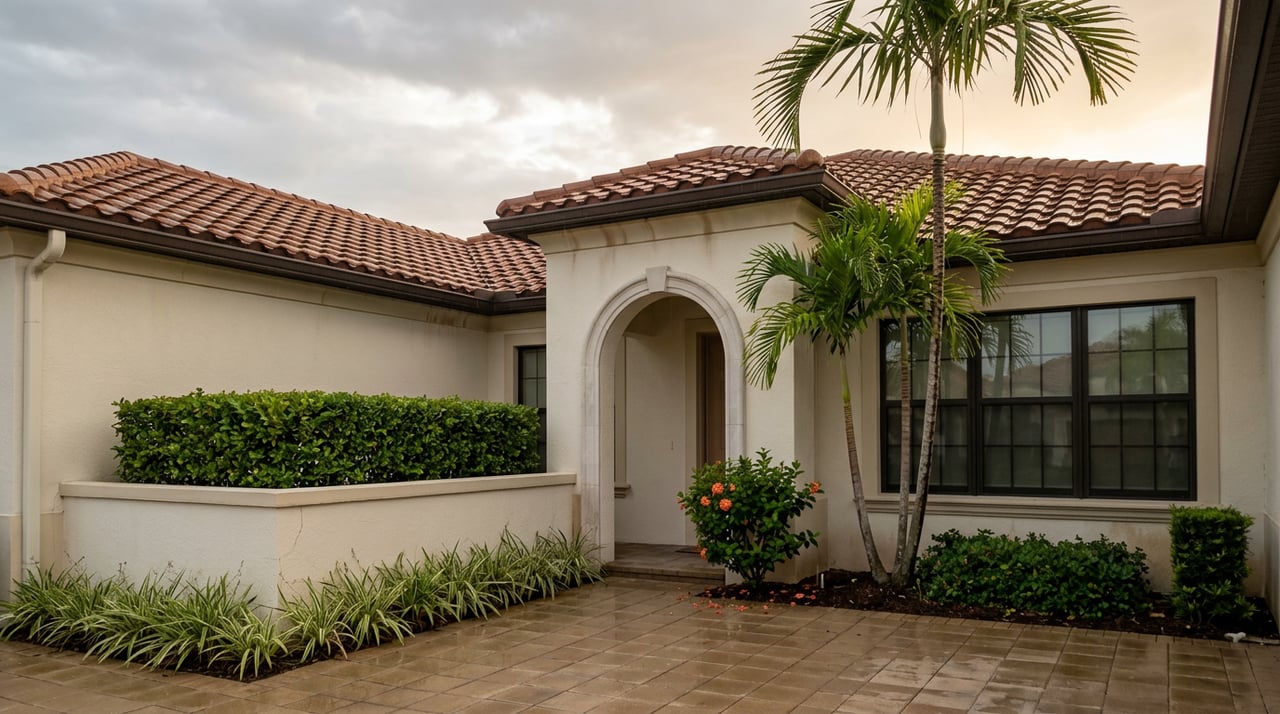
In Venice Golf Communities, a Low CDD Fee Doesn't Mean a Low Total Cost
Two listings crossed my desk the same week this summer, both in Venice-area golf communities, both around 2,200 square feet, both priced within $15,000 of each other. One buyer looked at the community development district line on each and picked the smaller number, confident she'd found the better deal. She hadn't. The home with the tiny CDD assessment carried an HOA payment nearly three times higher than the other property, and by the time you added everything up monthly, the "cheap" community cost more to live in.
This happens constantly in Venice because a CDD fee and a total cost of ownership are not the same question, and almost nothing on a listing sheet forces a buyer to see the difference.
A Community Development District is a unit of local government, created under Florida Statute Chapter 190, with the power to issue tax-exempt bonds and levy assessments to build a neighborhood's roads, drainage, utilities, and shared amenities before a single house is finished. The developer uses those bonds instead of financing construction out of pocket, then passes the repayment to homeowners as a line item on the county property tax bill. Two things ride inside that one number: a bond, or debt service, portion that eventually gets paid off, typically over 20 to 30 years, and an operations and maintenance portion that never goes away and can rise as the community ages.
That structure is why a "low CDD" figure can be misleading on its own. A district that's further along in paying off its bonds shows a smaller number. A district that just broke ground shows a larger one. Neither number tells you whether the community shifted the same construction and amenity costs into the HOA instead, or whether it never used a CDD at all and built everything with private capital up front.
I looked at four Venice-area golf and master-planned communities that get compared to each other constantly by relocating buyers, and each one solves the "how do we pay for this" problem differently.
| Community | Fee Layers | CDD? | What Actually Stands Out |
|---|---|---|---|
| IslandWalk at the West Villages | HOA only, or HOA plus a small CDD | Yes, often modest | One listing this summer carried an annual CDD assessment of just $554, while current HOA dues run roughly $273 to $312 a month |
| Sarasota National | HOA plus CDD, plus mandatory golf membership in some sections | Yes | Golf Village homes require membership; Lake Village homes do not, despite sharing the same course |
| Venetian Golf and River Club | Master association fee, separate River Club amenity fee, CDD, and individual HOA or condo dues | Yes | Four distinct fee lines instead of one or two |
| Venice Golf and Country Club | Master association fee and membership dues only | No | Zero CDD fees across all 587 properties in the community |
The pattern that matters here isn't which community is "best." It's that the fee architecture, not the fee size, is what predicts your real monthly number.
IslandWalk is the clearest example of cost shifting to a different line. Its CDD assessment can look almost trivial next to other Venice communities, but that's because the ongoing landscaping, cable and internet bundling, gated security, and amenity upkeep that other communities fund through separate charges are folded into the HOA dues instead. A buyer who only compares CDD figures across listings will think IslandWalk is the bargain and miss that the HOA is doing the CDD's job under a different name.
Sarasota National splits its cost structure by section rather than by fee type. Homes in the Golf Village carry a mandatory membership on top of HOA and CDD charges, while homes in the Lake Village pay HOA and CDD without the membership obligation, even though both sit inside the same community and both residents can eventually use portions of the same amenities under different access rules. Two homes a few streets apart can carry meaningfully different total costs for reasons that have nothing to do with square footage.
Venetian Golf and River Club takes the opposite approach from IslandWalk. Instead of folding costs into fewer, larger lines, it separates them into four: a master association fee, a distinct fee for use of the clubhouse known as The River Club, a CDD assessment, and an individual HOA or condo fee depending on the unit. Buyers here often come away confused not because the total is unusually high, but because no single number on a listing sheet reflects it. You have to add four lines to get an honest picture.
Venice Golf and Country Club sits at the far end of the spectrum. There is no CDD fee anywhere in its 587 properties, a detail the community states directly on its own site. That doesn't mean the community is cheaper to run. It means the original infrastructure, from private roadways to the entry gatehouse to the nature preserves the Master Association still maintains, was financed differently from the start, likely through developer capital and ongoing membership dues rather than a public bond. The cost of maintaining a golf community doesn't disappear when there's no CDD. It just shows up somewhere else on the ledger.
Here's the part that catches buyers off guard at the closing table, not the shopping stage.
Florida Statute 190.048 requires a specific, boldface disclosure any time a parcel inside a CDD is sold, warning the buyer in oversized type that the district can levy taxes and assessments. It's a genuinely useful protection. But the statute's language is narrower than most buyers assume. It applies to "the initial sale of a parcel of real property" within the district, meaning the very first time that lot or unit changes hands after the CDD is formed.
Every sale after that first one, every resale in a Venice CDD community from the second owner forward, doesn't automatically trigger the same boldface warning. Nothing in the resale contract is required to shout the CDD's existence at you in bigger type than the rest of the page. The obligation to find the assessment, understand the remaining bond balance, and calculate what years are left on the debt service falls on the buyer and the buyer's agent, not on the seller's paperwork.
This is exactly backwards from what most people expect. The first buyer in a brand-new IslandWalk or Sarasota National section gets a legally mandated red flag. The fifth owner of that same house, buying resale a decade later, gets none. If you're shopping resale in any Venice CDD community, which is most of what's actually on the market at any given time, you are the one responsible for pulling the Sarasota County tax bill and checking for the non-ad valorem assessment line yourself.
Before you write an offer in any Venice golf or master-planned community, treat the fee comparison as an arithmetic problem, not a glance at one number. Pull the current property tax bill for the specific parcel and look for the CDD line, since MLS listings sometimes leave that field blank or fold it into the general tax estimate. Ask the district directly, or check its public meeting records the way you'd find on the Sarasota National CDD's own site, for the current bond balance and how many years of debt service remain, since a district ten years into a thirty-year bond carries a very different trajectory than one that just issued.
Ask whether the HOA or master association fee already covers items a CDD would normally fund elsewhere, since that's the IslandWalk pattern repeating itself under different names across other communities. And if you're comparing a community with mandatory golf membership against one without, price the membership as its own recurring cost rather than folding it into a vague sense that "golf communities cost more," since the actual number varies by section within a single community, the way it does at Sarasota National.
None of this makes CDD financing good or bad. It's a financing mechanism, not a verdict on a community's quality. The problem is comparing communities by whichever single number happens to be printed on the listing sheet, when that number was never designed to tell the whole story on its own.
Does a CDD fee ever go away? The debt service portion does, once the original bond is paid off, usually over 20 to 30 years from when the district issued it. The operations and maintenance portion continues indefinitely and can rise as the community ages or adds amenities.
Can a seller pay off the remaining CDD bond before closing? It happens, but it's the exception rather than the rule. The obligation is tied to the parcel, not the individual owner, so unless a seller specifically negotiates a payoff into the contract, the remaining balance and its future assessments transfer to the new owner.
Do golf memberships transfer automatically with the house? It depends entirely on the community and, as Sarasota National shows, sometimes on which section of the community the home sits in. Some memberships are mandatory and tied to specific home types, others are optional add-ons. This is exactly the kind of detail worth confirming in writing before you're past your inspection period.
If you're comparing two Venice-area communities and the fee lines on the listing sheets don't seem to line up with what you're hearing about the lifestyle, that's usually a sign the financing structures are different, not that one listing is wrong. I'd rather walk you through the actual tax bill and district records before you write an offer than have you find out the real number at the closing table. Let's Connect, and we'll go through the specific communities you're weighing line by line.





5208 ASHLEY PKWY SARASOTA, FL 34241