On Anna Maria Island, the Elevation Certificate Is the Real Price Tag
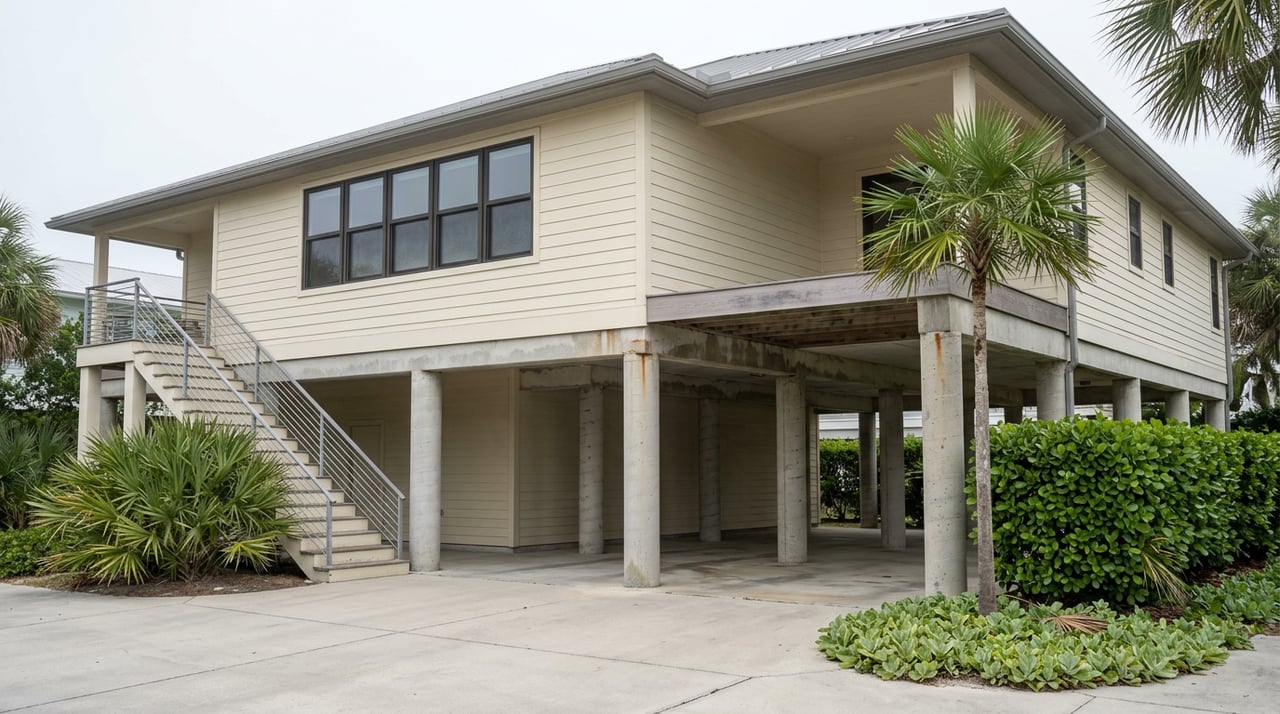
Two homes on Anna Maria Island are listed within a few thousand dollars of each other this month. One sits on a concrete slab poured sometime in the 1970s or 80s. The other went up after 2024 on driven pilings, its living space fourteen feet above the ground. A buyer comparing these two properties on list price alone is comparing the wrong number. The number that actually separates them shows up later, on the flood insurance quote and the building permit application, and it can run into five figures a year.
That gap is not random. It is the direct result of two rules working on the island at the same time: how FEMA prices flood risk under Risk Rating 2.0, and how a federal floodplain regulation limits what you can legally do to an older, non-elevated home before you're forced to rebuild it from the foundation up. Understanding both is the difference between buying a bargain and buying a ceiling.
The average flood insurance premium on Anna Maria Island currently runs around $2,108 a year, with some standard NFIP policies quoted as high as $2,680. That average is not where the story ends. FEMA's own projections put the average annual cost closer to $5,793 within the next decade, a 175 percent increase, and that's the average across all properties, not the ceiling.
The real spread shows up property by property. Older homes without a current elevation certificate, or those sitting below Base Flood Elevation, can see premiums anywhere from $2,500 to well over $10,000 a year. Combine that with wind coverage on an uncertified older structure and the total annual bill can land between $15,000 and $40,000. Under Risk Rating 2.0, FEMA doesn't price a flat rate for a flood zone anymore. It prices the specific parcel: elevation, distance from the Gulf, replacement value. A slab-on-grade cottage two blocks off the beach and a pile-elevated home on the same street can carry entirely different numbers even if the county tax card lists them at similar values.
Elevation doesn't make the insurance bill disappear, though. New construction built twelve to sixteen feet above sea level does tend to qualify for lower premiums and easier binding, but a luxury elevated home in the $3 million to $5 million range can still carry combined wind and flood premiums of $30,000 to $60,000 a year, simply because the coverage amount needed on a larger, higher-value structure stays high regardless of elevation. What elevation actually buys you is insurability. Some ground-level homes on the island are reaching a point where getting a policy at any price is the harder problem.
Here's the part that catches buyers off guard during due diligence, not before it. Federal floodplain regulation, formalized under 44 CFR 59.1 and adopted into the Florida Building Code, caps how much you can renovate a structure in a high-risk flood zone before the government requires full compliance. If the cost of repairs or improvements to a building equals or exceeds 50 percent of that structure's market value, and this is structure value only, not land, the entire building has to be brought up to current elevation and floodplain code. That threshold is not calculated per project. It's cumulative over a rolling window, so a kitchen remodel this year and a bathroom addition next year can stack toward the same limit.
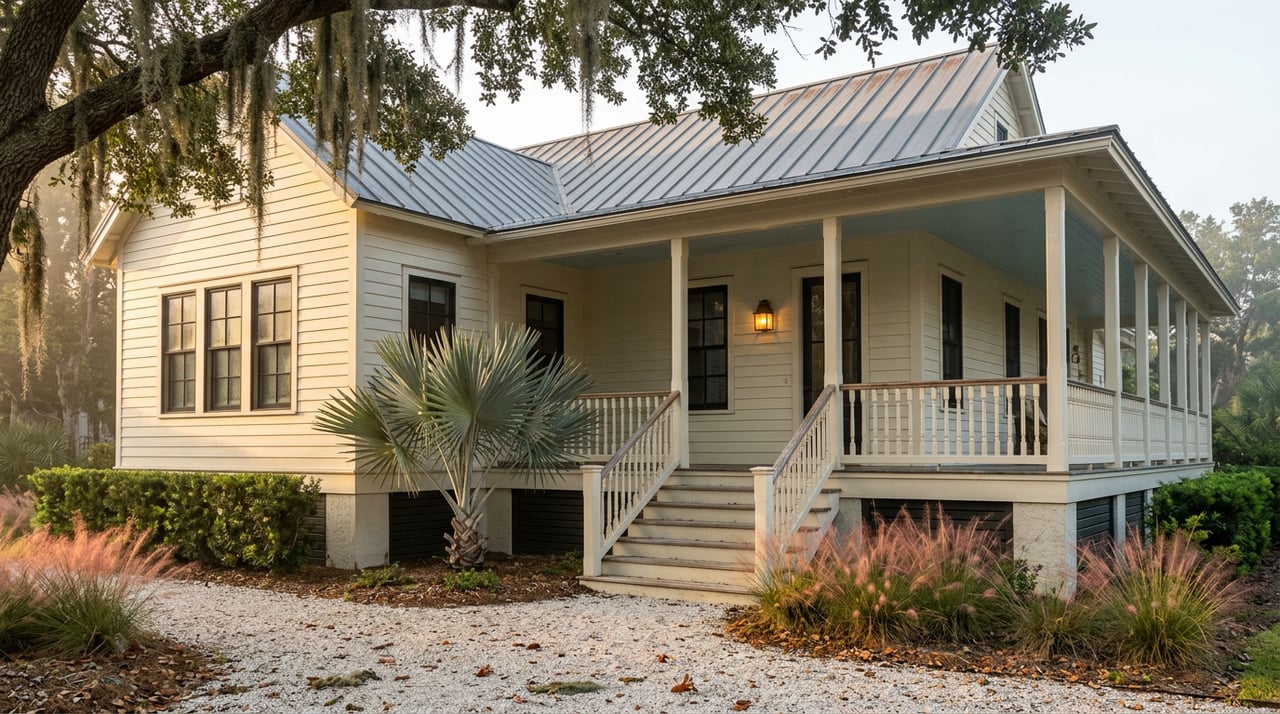
Practically, this means a lot of the pre-1990s cottages currently priced below the island's elevated new builds are sitting on a ceiling. An owner can update roughly half the structure's value before the city requires the whole thing be lifted to Base Flood Elevation plus freeboard, and once storm damage or ambition crosses that line, a full elevation retrofit or teardown-rebuild often pencils out better than a partial fix. That's also a large part of why so much of the island's recent construction looks the way it does. Pilings and elevated slabs aren't a design trend. They're the compliance path that new construction gets to build in from day one instead of hitting later as a forced upgrade.
In the city of Anna Maria specifically, average home values have slipped in the past year, down roughly 7.5 percent as of a June 2026 valuation. That decline reads as a cooling market. It's more accurate to call it a sorting market.
Closed sales data for that same city showed a median around $1.6 million as of February 2026, but that month only saw five homes close within city limits. When your entire sample is five transactions, one elevated luxury closing versus one storm-damaged cottage closing can swing the median by hundreds of thousands of dollars in either direction. That's not noise you can average away. It's the bifurcation itself showing up in the data, and it's sharper in a small city like Anna Maria than it would be in a market with hundreds of monthly closings.
The trend underneath is more telling than any single month's median. Inventory on the island nearly tripled after the 2024 storms as damaged properties hit the market, and absorption rates stretched from about four months of inventory in the third quarter of 2024 to roughly twelve months by the first quarter of 2025. At the same time, the share of sales closing above $2 million climbed from about 15 percent in the second quarter of 2025 to 25 percent by the third quarter. Recovery has not been even across the island's housing stock. It has concentrated in the storm-hardened, elevated tier, while a meaningful share of ground-level inventory is still working through insurance sticker shock and renovation-ceiling math before it finds a buyer.
| Older ground-level home | Post-storm elevated construction | |
|---|---|---|
| Typical flood insurance | $4,000 to $12,000+ a year, higher without a current elevation certificate | Lower per dollar of coverage, generally easier to bind |
| Renovation limit | Capped near 50% of structure value before full elevation is required | Already code-compliant, no ceiling on future updates |
| Elevation cost if rebuilding | $150,000 to $350,000+ in foundation and pile work | Already built into the purchase price |
| 2025-2026 market behavior | Slower sales, some pricing closer to land value alone | Faster sales, holding value, multiple offers in the $1.5M to $2.5M range |
Anna Maria Island is governed by three separate municipalities, Anna Maria, Holmes Beach, and Bradenton Beach, and they do not regulate short-term rentals or storm recovery the same way. Holmes Beach and Bradenton Beach generally allow short-term rentals with proper licensing. Anna Maria City runs materially stricter rules, including minimum-stay requirements and licensing caps that change the math for an investor-buyer. The city has since stabilized its fee structure at roughly $105 per occupant and requires annual safety inspections covering everything from pool alarms to secondary exits, which is now simply a baseline operating cost for anyone renting there.
The divergence showed up in real time after the 2024 storms, too. Anna Maria village, which fared the best against Helene's storm surge, was the first city to reopen in October 2024 with no curfew and no property inspection requirement. Bradenton Beach, despite absorbing the worst of the surge damage, was also welcoming rental guests by November 2024. Holmes Beach was slower. A rental moratorium originally set to run until November 16, 2024 was pulled forward, but the city still ended up the last of the three to accept guests again. If your purchase math depends on rental income, which city line the parcel sits inside matters as much as the elevation certificate does.
Nearly two years after Helene and Milton, the recovery is not finished, even at the government level. Florida's 2026-27 budget, signed by Governor Ron DeSantis on June 29, 2026, included $2,881,670 in state appropriations for projects across the three island cities. Anna Maria received the largest share, $1,250,000, specifically to rebuild the city's public works building at 402 Pine Avenue, which sustained structural damage in the 2024 storms, according to reporting from the Anna Maria Islander.
That's worth sitting with. If a municipal public works building is only now getting funded for reconstruction, it's a reasonable signal that permitting queues, contractor availability, and material lead times on private projects around the island still carry some of that same drag. The price split between elevated and ground-level homes isn't a temporary post-storm anomaly working itself out. It's still an active, ongoing part of how this market prices risk.
Pull the elevation certificate before you get emotionally attached to a listing, not after you're under contract. Get an actual flood insurance quote based on that specific property's elevation and flood zone, not a statewide average, since Anna Maria's numbers regularly run two to six times higher than what a generic estimate would suggest. Confirm which of the three cities the parcel sits in and check short-term rental rules directly with that city if rental income is part of the plan. And keep an eye on timing this fall: the National Flood Insurance Program's current authorization runs only through September 30, 2026, and NFIP policies carry a 30-day waiting period before coverage starts, so waiting until the final week of a contract to apply is not a safe bet this year.
Does the 50 percent rule only apply if I'm planning a renovation on purpose? No. If a home takes storm damage and the cost to repair it to its pre-damage condition equals or exceeds 50 percent of its pre-damage market value, it's treated as a substantial improvement regardless of whether the owner intended a renovation at all.
If a home never flooded during Helene or Milton, can I skip the insurance conversation? Not really. Because nearly the entire island falls within FEMA's high-risk flood zones, most lenders will require flood coverage regardless of a specific property's claims history, so the elevation certificate still determines your premium even on a home that stayed dry through both storms.
Is the cheaper, older cottage ever still the right buy? Sometimes, particularly for a cash buyer who wants a personal retreat rather than rental income and who goes in with eyes open on the renovation ceiling and the real insurance number. It's a different bet than buying elevated new construction, and it should be priced like one.
If you're comparing properties on Anna Maria Island and want a straight read on what a specific address will actually cost to insure and what you can and can't do to it, Arlene Buckmaster can walk through the elevation certificate, the flood zone, and the city-specific rules before you ever write an offer. Let's Connect.


5208 ASHLEY PKWY SARASOTA, FL 34241